
Multi-Measurement Support and IMU Calibration
December 20, 2024TofuPilot now supports measurements, one of the most requested features. This means better analytics for OpenHTF users and a simpler way to write test scripts with the Python client.
Measurements & Multi-Measurement
Hardware tests usually follow a common structure: data is collected from the Device Under Test or an instrument, errors are logged, then specific measurements are performed and validated before moving to the next phase.
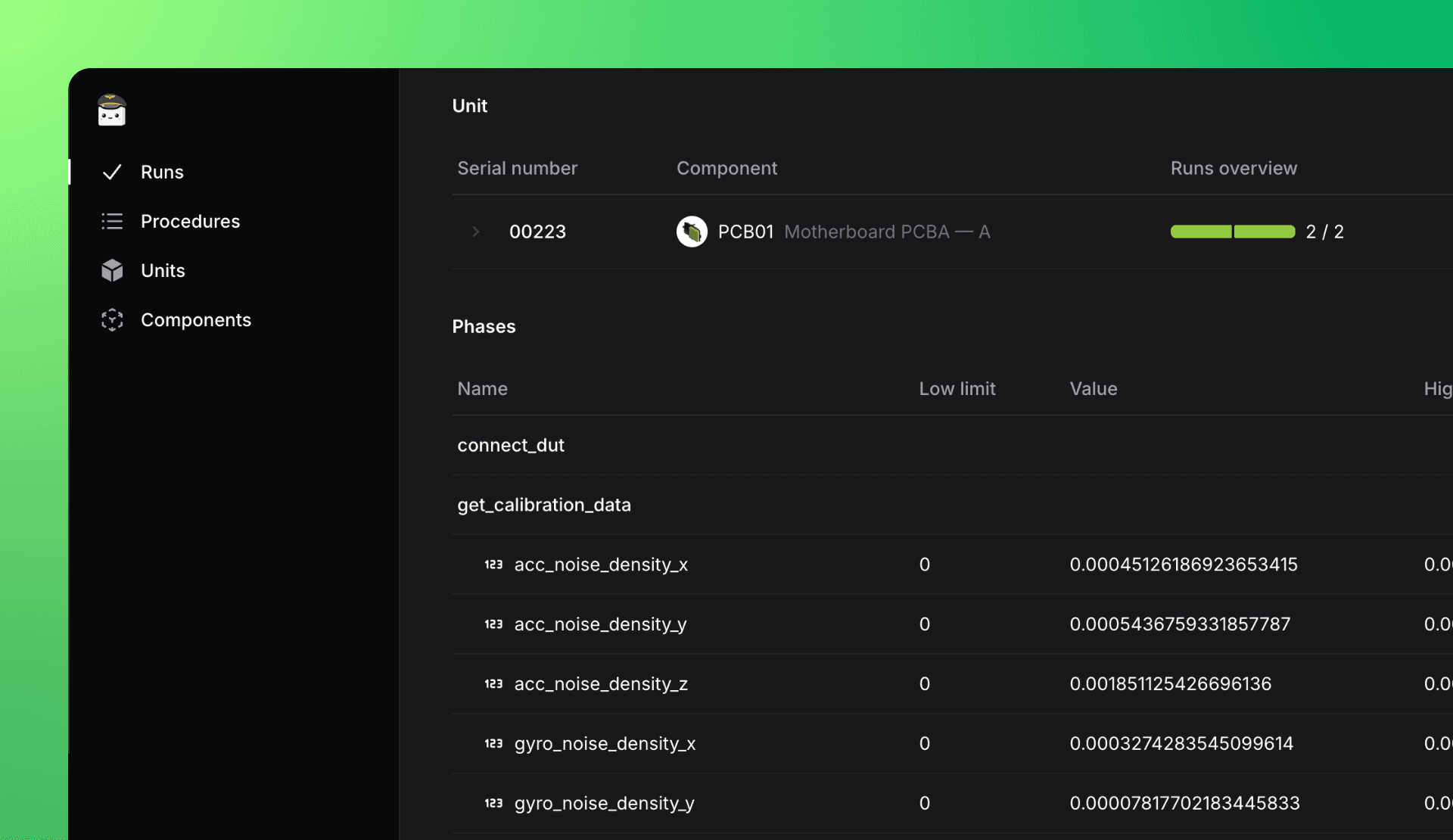
For example, we acquire a voltage timeseries from a multimeter, compute the average voltage, and verify it falls within the specified range of 3.1–3.5V.
Frameworks like OpenHTF maintain this structure by separating:
Phases: Test steps that perform actions and return a pass, fail, or skip status.
Measurements: Specific values captured during phases with optional validators.
TofuPilot now fully supports this data model, making your test scripts shorter and enabling more granular analytics.
Measurements are a major change but support incremental adoption on your side.
OpenHTF users: No action needed. Tests with multi-measurements now sync automatically.
Python client users: You can use the new phases argument in the create_run function. Steps will be deprecated but remain accessible for now. Existing steps have been migrated automatically.
Template: IMU Thermal Calibration
Many of you asked for code samples. Here's our first open-source template: calibrating an IMU for temperature on the production line. With two sensors, three axes each, and 36 measurements across two phases, it shows what multi-measurement can do with OpenHTF and TofuPilot.
It's a bit nerdy, but we're sure you'll find it useful. More templates are coming. Share your ideas with us.
TofuPilot's 2024
TofuPilot is now live in 10 factories, processing thousands of runs per month. We won 3 innovation awards, incorporated the company, shipped 30+ releases, and moved into new offices at the Unlimitrust Campus in Switzerland.

See you in 2025.